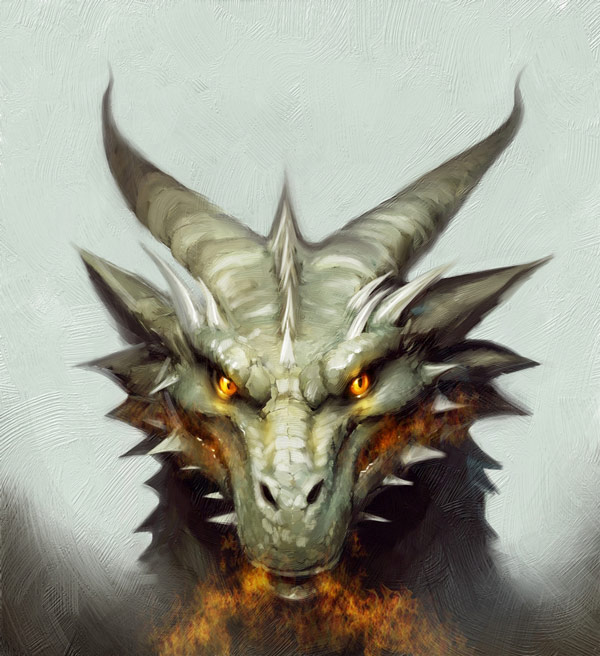
Familiar form, different natures.
“We are ignorant of the meaning of the dragon in the same way that we are ignorant of the meaning of the universe…” – Jorge Luis Borges.
Somewhere in the twelfth century, a poet sat down to write about a mysterious vessel, and eight hundred years later people are still writing stories inspired by the myth that grew out of it. I’ve always been drawn to myths that refuse to die—stories so deeply embedded in human imagination that no amount of scepticism can dislodge them.
The Grail
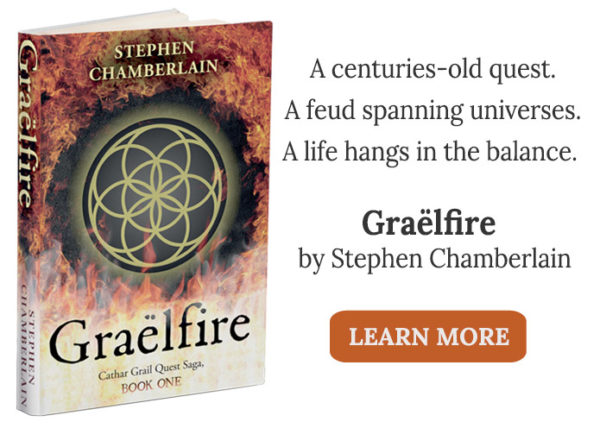
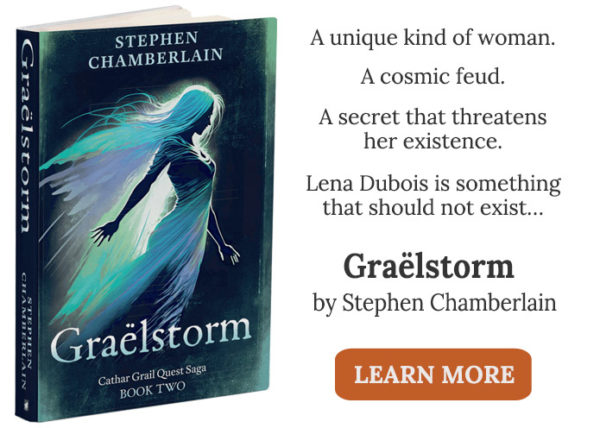
My novels Graëlfire and Graëlstorm began with the most persistent of these: the Holy Grail. Writers have retold and reworked it so many times that it survived the medieval world that first gave it shape. Some have seen echoes of older Celtic legends of magical cauldrons. Some describe it as a cup used at the Last Supper. Others have recast it as a platter, a miraculous stone, and even a sacred bloodline. In my novels, it becomes a cosmic stone with the power to channel graëlfire. The Grail has never been a fixed object in myth. It’s been a vessel, a relic—the embodiment of something elusive and sacred. Its physical identity has changed, but what it represents recurs: something always just out of reach, promising transformation, healing, abundance, or salvation. It’s an idea I considered while writing my upcoming Gothic novel, Draken Seed.
The Dragon
In contrast to the Grail, there is a curious consistency about dragons. Older and more globally distributed than the Grail, dragons appear in Norse sagas, Chinese cosmology, Celtic legends, and medieval romances. We lump them all together under a single label, but dragon conceals how different these creatures can be. The Chinese lóng, the Japanese ryū, and the various European dragons aren’t simply versions of the same creature. They belong to different mythic traditions that nevertheless converge on a surprisingly similar form: powerful, serpentine, scaled. Not quite of this world.
Their natures, however, are radically different. In many East Asian traditions, dragons are elemental forces associated with water, rainfall, and the regulation of the natural world. Move the myth to medieval Europe, and something changes. The same serpentine shape becomes adversarial—chaos wearing scales, sin given teeth. Figures such as Beowulf’s and St George’s dragons aren’t benevolent forces, but existential threats the hero must overcome. Later, even that symbolism fractures, and stories stop agreeing on what the dragon represents. Tolkien imbued Smaug with intelligence, greed, and vanity. Le Guin used dragons to explore language and the nature of truth. McCaffrey turns them from monsters into symbiotic partners—their riders’ other halves. By the time we reach modern fiction, a dragon can be a villain or an ally, a source of wisdom or a weapon of mass destruction.
Yet we still recognize it as a dragon. That’s what makes the myth compelling. The Grail can change its physical identity while retaining its mythic function. The dragon does almost the opposite. Its shape remains recognizable while its nature keeps changing. That may be one reason it has proved so durable. The familiar shape gives the storyteller something to inherit. Its purpose remains open to reinvention.
Jorge Luis Borges understood something of this. In The Book of Imaginary Beings, he observes that something in its image appeals to the human imagination—and perhaps that is why cultures in different places and periods keep imagining dragons independently. For Borges, it is “a necessary monster.” Not an accidental creature of a particular tradition, but something the imagination seems repeatedly compelled to create.
Draken Seed
That distinction became important to me when I began writing Draken Seed. I deliberately chose not to mess with the traditional Western form of the dragon. An archetype this powerful comes already loaded with centuries of inherited imagery—scales, wings, claws, fire, ancient power, danger. Readers recognize it before the story has told them what it is. I didn’t want to discard that accumulated weight. I wanted to use it as an anchor.
The dragon in Draken Seed is recognizably a dragon, but recognition is only the beginning. Underneath the familiar shape is something older and stranger—a liminal quality that runs through dragon mythology. Across many traditions, dragons occupy a space between worlds—the natural and the supernatural, the earth and the sky. In Draken Seed, I take that quality literally. My dragons can cross between the human world and what lies beyond it. They aren’t monsters or allies, but something else: beings with a flaw—attachment. Not the tender kind, but the sort that doesn’t ask for permission. Like a fault line through rock, its impact is etched into bloodlines—invisible until triggered, at which point there is no escaping it. It doesn’t stay contained to one life or one story. It repeats, generation after generation—the same flaw in a different age. And somewhere in a frozen Nordic winter, under the Northern Lights, it’s about to find its next victim.
What interested me wasn’t reimagining what a dragon looks like. It was taking the thing the reader thinks they understand and subverting that assumption. The shape says: you know what this is. The story then asks: do you, really? That is the freedom contained within an archetype. You don’t always have to change the shape to change the meaning.
Perhaps that is why the dragon has endured. Its familiar form gives us something to recognize, while its nature remains open to reinvention. Draken Seed makes the dragon its own. You know what a dragon looks like. You don’t know what this one wants.