
In Gothic fiction, atmosphere rules.
“The Gothic is primarily a mode of feeling, an atmosphere of haunting and mourning rather than a set of fixed themes.” – Alison Milbank
First Encounters
I stumbled into Gothic fiction in secondary school. The dark, emotional tension in Jane Eyre, Rebecca, and Wuthering Heights hooked me right away. Each country house and moor felt alive, almost characters in themselves. I loved how the mood shaped the story as much as the people in it. Dracula and Frankenstein followed later. They weren’t part of our English syllabus, but I watched film adaptations and then read the books. That’s when Gothic worlds became more than something I studied in class. They were places I could explore on my own.
Gothic fiction hits home at certain stages in life. For teens, it can strike a powerful chord. These stories brim with injustice, anger, and that sense of not quite belonging, emotions that click with the adolescent state of mind. For others, the connection deepens in early adulthood, when we start to question authority and social norms. At this stage, Gothic novels peel back respectable veneers, exposing repression, hypocrisy, and hidden violence. Books like Dracula and Carmilla can take on new meaning then, revealing undercurrents of seduction that might have gone unnoticed before.
Grasping Mist
Trying to define Gothic literature is like catching mist; it’s there, but it slips through your fingers. Like horror, it’s steeped in fear and dark themes. But Gothic stories aren’t all about ghosts or monsters. Classics such as Jane Eyre and Rebecca have no supernatural elements at all, yet they drip with suspense, mood, and psychological terror. Instead of shocking you with gore, they creep up on you slowly. In Gothic fiction, terror doesn’t always wear a monstrous mask.
For me, the Gothic is less a rigid genre and more of a flavour—a way of telling a story. Sometimes it’s the whole meal, like The Castle of Otranto. Other times it adds spice to genres like fantasy, romance, historical fiction, and horror. From the windswept moors of West Yorkshire to the shadowy Carpathian Mountains, Gothic novels share a sense of decay and dread. Castles crumble. Families fracture. Minds unravel. Something always feels on the brink of collapse, and that slide into chaos is more unsettling than any sudden scare.
Mood and Pace
In Gothic fiction, atmosphere rules. Mood comes before action, drawing you into a world thick with tension. Whether it’s the howling moors of Wuthering Heights or the claustrophobic corridors in The Haunting of Hill House, the setting pulsates with emotional energy. Characters are often physically or emotionally isolated, stranded in remote places or trapped behind walls. This isolation deepens the suspense and forces them to face their inner fears.
Michelle Paver’s ghost story, Dark Matter comes to mind with its Arctic remoteness, haunting atmosphere, and creeping terror, or The Woman in Black, which is set on a marshy island cut off from the mainland by shifting tides. These settings are more than just backdrops; they dial up the stakes. Escape is rarely an option, and when something menacing stirs, there’s nowhere to run. Even the weather plays its part. Storms, blizzards, and creeping fog don’t just set the scene; they amplify our unease and keep us on edge.
The pacing of Gothic fiction captivates me, too. Unlike jump-scare horror, it allows terror to seep in slowly. While horror often thrives on graphic violence or sudden shocks, Gothic stories create a quiet, lingering sense of dread. Novels like The Turn of the Screw show how unsettling this can be. A young governess arrives at a remote estate and becomes convinced that the children are being corrupted by apparitions. Like Sarah Water’s The Little Stranger, the story blurs the line between haunting and psychological disturbance, leaving us questioning what’s real and what exists only in her mind. In Gothic fiction, emotional unease is the true source of horror, not visceral fright. Your nerves are already frayed by the time the climax hits. It’s that slow-burn suspense that makes Gothic fiction so addictive—the sense that something sinister is always around the corner.
Ambiguity
In most horror stories, the villain is obvious—a monster to defeat or a threat to escape. Think of Pennywise in It or the shark in Jaws. Gothic fiction works differently. Its allure lies in uncertainty. Villains are seldom purely evil; they’re morally complex and sometimes even sympathetic. Is Frankenstein’s creature a monster or a tragic product of human ambition? Is Hill House truly haunted, or is Eleanor’s unravelling mind the real horror?
Gothic stories blur the boundaries between good and evil. Supernatural events may be overt or barely hinted at. This ambiguity is what makes Gothic fiction so unsettling. Characters are often caught in a state of liminality between life and death, sanity and madness, desire and restraint, or the past and present. Such in-between states challenge the characters’ sense of security and make their inner struggles more central. While traditional horror often centres on survival—who lives and who dies—the Gothic delves into psychological turmoil: guilt, repression, obsession, forbidden desire. In Dracula and Frankenstein, the monsters reflect anxieties about power, identity, and unchecked ambition, while Michelle Paver’s Wakenhyrst explores oppression, madness, and female resilience.
I think this is why books feel more Gothic than their film adaptations. Gothic fiction thrives on interiority, thoughts and paranoia that are deeply personal. Movies give you images and sounds, but novels put you inside a character’s thoughts. We can feel every doubt, every heartbeat, every moment questioning what’s real. Tension can stretch over pages, even chapters, and uncertainty is allowed to linger without being visually resolved. Films are immediate and concrete: we see and hear what’s happening. But the best Gothic vibe comes from what is unseen and unsaid, letting our imagination run wild. Cinema evokes mood with sound, shadow, and lingering camera work, but that’s not the same as being trapped inside a character’s mind, where the real unease lives.
Myth meets Gothic
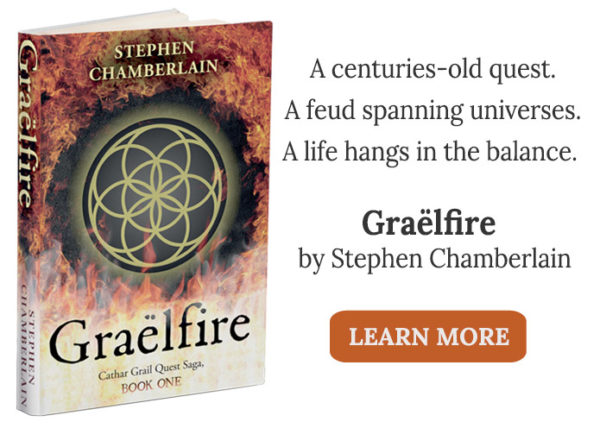
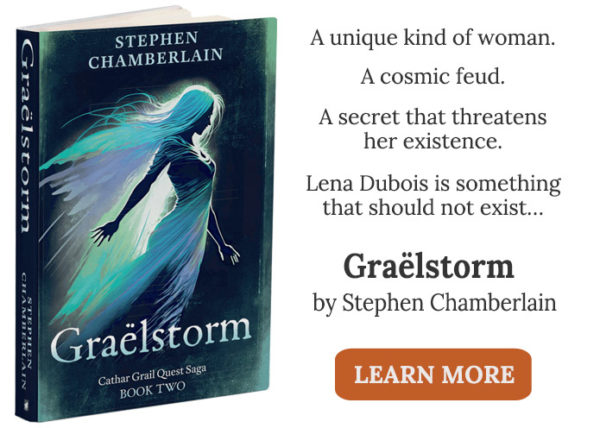
My next book leans into Gothic themes more than anything I’ve written before. As a mythic fantasy writer, my previous novels, Graëlfire and Graëlstorm centred on an epic Grail quest: sweeping journeys, perilous roads, and the pull of destiny. This time, I’m turning inward.
Set in a Scandinavian winter, the story unfolds in a secluded castle blanketed by snow and silence. The supernatural isn’t distant or symbolic—it seeps into corridors, dreams, and family bloodlines. Rather than focusing on exploits, the narrative dives into shadow—into insecurity, legacy, and hidden identity. The bones of mythic fantasy are still there: mystical creatures, ancient secrets, fate, and the weight of history, but everything is wrapped in Gothic shadow. I’ve always loved that mood as a reader, and as a writer, I find it fascinating to create.