To face monsters is to face ourselves.
“Like one that on a lonesome road
Doth walk in fear and dread,
And having once turn’d round, walks on,
And turns no more his head;
Because he knows a frightful fiend
Doth close behind him tread.”
—Samuel Taylor Coleridge
Fantasy thrives on the battle between good and evil. Evil is often personified as something monstrous. From Tolkien’s orcs to Martin’s White Walkers and Rowling’s Dementors, these creatures tap into our darkest fears. They’re the shadows in our periphery, the footsteps in the dark…the threat we keep trying to ignore. But what fuels our fascination with monsters? And why do they linger in our imaginations?
Monsters exist for a reason. They terrify us, but they also challenge us to think about ourselves and the world we live in. In storytelling, they play three key roles—warning us of danger, providing entertainment, and revealing our deepest fears and anxieties.
Warnings
H.P. Lovecraft once said, “The oldest and strongest emotion of mankind is fear, and the oldest and strongest kind of fear is fear of the unknown.” This rings especially true with monsters.
Fear is a primal survival instinct that keeps us alert to danger. Monsters embody that fear; the word comes from the Latin monstrum, meaning omen or warning. Folklore is full of creatures that teach us moral or social lessons. Greek myth gave us the Hydra, Scylla, and Minotaur as warnings against defying the gods or meddling with nature. The Anglo-Saxon epic Beowulf featured the ogre Grendel. Other cultures had their own monsters. Eastern Europe had the vampiric Strigoi, North America had the man-eating Wendigo. Scandinavia gave us the zombie-like Draugr, and Jewish myth told of the Golem. Fairy tales also teem with creatures like witches, beasts, goblins, and trolls. These monsters aren’t just villains. They warn about the dangers of straying too far from safety. You might fall victim to forces you can’t control.
Entertainment
We might be terrified of monsters, but let’s face it—we can’t tear our eyes away. We peep through our fingers because, as Professor Leo Braudy put it: “We are drawn to see what we also dread to see.” There’s something thrilling about confronting what scares us, especially from a safe distance. It’s a kind of twisted pleasure—a rush we can’t resist. That’s why monsters make great entertainment.
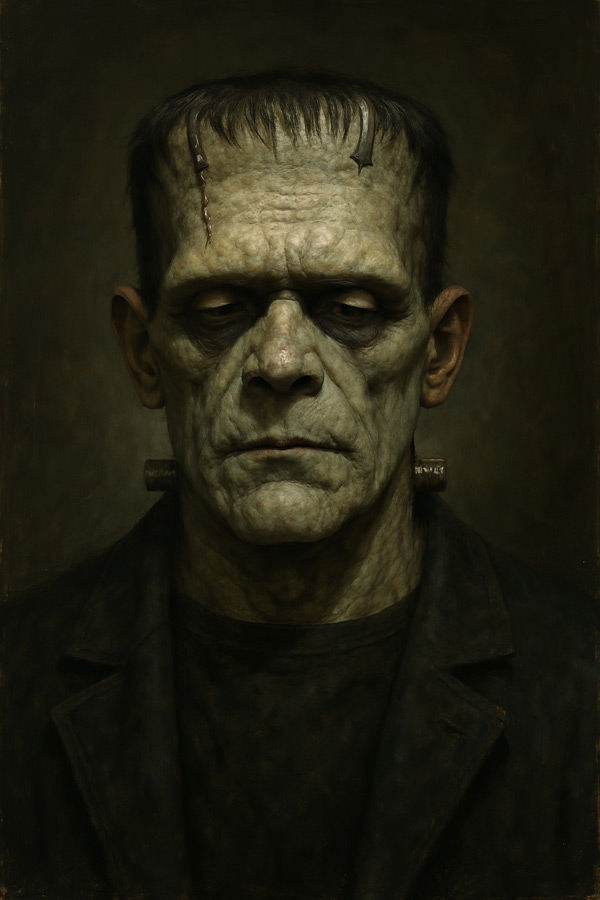
In the nineteenth century, Bram Stoker’s Dracula showed us a vampire that was both grotesque and seductive, Mary Shelley’s Frankenstein introduced a man-made monster, while Erckmann-Chatrian’s The Man-Wolf featured shape-shifting werewolves. These creatures are no longer just tools for teaching a lesson. They take centre stage, fuelling suspense and keeping audiences on the edge of their seats.
By the twentieth century, monsters were essential to popular fiction. They raised the stakes and showcased the hero’s courage. Tolkien introduced us to orcs and Smaug. Lovecraft unleashed Cthulhu—one of a pantheon of cosmic horrors beyond human understanding, while Rowling conjured soul-sucking Dementors. Often, like Tolkien’s demonic Balrog, these creatures are simply obstacles for the hero to defeat. But the most compelling monsters are more than just physical threats; they challenge our understanding of human nature. Take the Striga, a cursed princess turned into a bloodthirsty beast in The Witcher. Monster-slayer Geralt must kill her, but his deeper challenge is moral. He has to decide who is the true villain deserving of judgement—the creature or the one who cast the curse. Such moral complexity adds depth to the conflict. It also makes the story more engaging by forcing us to question our assumptions about right and wrong. Geralt’s dilemma echoes the German philosopher Nietzsche’s warning: “Whoever fights monsters should see to it that in the process he does not become a monster.”
Thanks to modern CGI, monsters today are more lifelike and entertaining than ever. Characters like Gollum and Smaug in The Hobbit not only add suspense but look spectacular on the screen. In recent years, fantasy monsters have also undergone a shift in perspective. They’re no longer evil for evil’s sake. Like the rift-ghast in my novel Graëlfire, writers now give them motives, backstories, points of view—even hearts.
Vampires are a prime example. Anne Rice’s Interview with the Vampire reimagined them as tragic, brooding figures, torn between their beast-like nature and their human sense of morality. Twilight went further, making them cool…even sexy. In The Witcher, the Striga evokes both sympathy and fear, echoing Frankenstein, where the creature turns to violence due to rejection and loneliness. Even Tolkien’s Gollum is a layered figure. He isn’t just an antagonist like wargs or goblins. He’s a tragic soul, driven by his addiction to the One Ring.
Giving monsters a point of view forces us to ask uncomfortable questions. Are they evil by nature, or are they influenced by circumstances and tragic experiences? Yet, beyond the spectacle and thrill, a monster’s impact lies in the ideas and themes it represents.
Metaphors
Many monster stories carry specific warnings or moral lessons. The creatures often represent abstract concepts, revealing deeper truths about humans and society.
Take Gothic horror. Victorian audiences were anxious about industrialization, disease, morality, and temptation. Dracula isn’t just a tale of a bloodthirsty count. It explores immortality and forbidden desires. Frankenstein isn’t just about a mad scientist. It symbolizes ambition, neglect, and moral responsibility. And Dr Jekyll and Mr Hyde, like the werewolf myth, represents the monster within—humanity’s struggle with its repressed, primal nature.
As times change, so do the themes monsters represent. Tolkien’s orcs symbolize the dehumanization wrought by industrialization and war. George Martin’s White Walkers are a chilling metaphor for climate change, and in my novel Graëlstorm, greylings personify one of our most primal fears: eternal oblivion after death.
Monsters act as a cultural barometer. Unchecked technology has inspired films such as The Terminator and Ex Machina, while zombie stories—once metaphors for slavery—now reflect contemporary concerns about pandemics. Each monster holds a mirror to its time. We might fear, pity, or even secretly cheer them on, but they force us think about society and the world as it changes.
For me, Del Toro’s recent movie, Frankenstein, says it all. Watching Jacob Elordi’s haunting performance of a creature beyond human control makes us think about what we create in the real world. Algorithms, artificial intelligence, and social media can all become harmful when stripped of empathy and compassion. Del Toro’s creature may belong to another century, but its warning couldn’t be more relevant today: the true horror isn’t what we invent, but what happens when we fail to take responsibility for it.